Uncanny Dwelling Delhi: India’s Spine-Chilling Homage to Horror & Heritage
Introduction: A Game That Breathes Delhi’s Soul & Scares
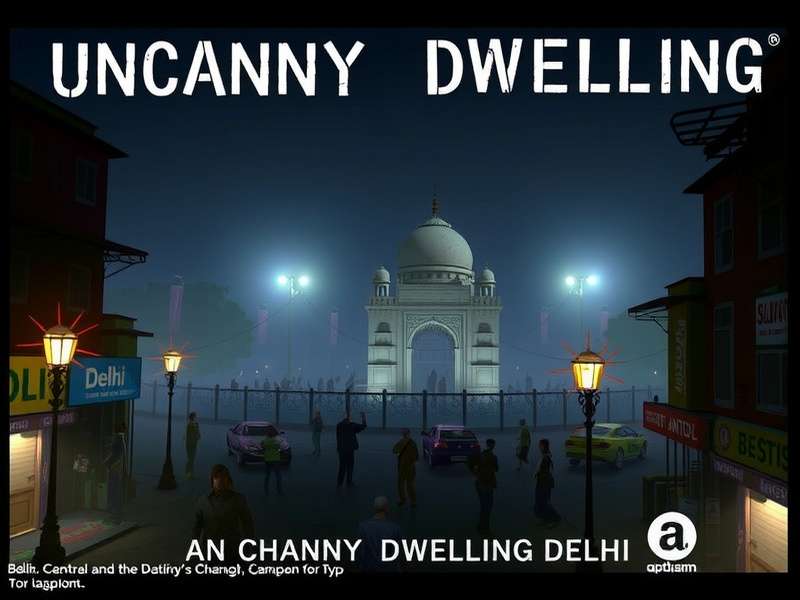
In the ever-growing landscape of Indian indie gaming, few titles have managed to strike a chord as deeply as Uncanny Dwelling Delhi. Launched in March 2024 by Delhi Indie Studios Collective and published by Daman Games, this horror-adventure masterpiece isn’t just another jump-scare fest—it’s a love letter to Delhi’s rich, chaotic, and hauntingly beautiful heritage, wrapped in supernatural terror that feels uniquely Indian.
Unlike generic horror games set in Western mansions or Japanese villages, Uncanny Dwelling Delhi plants players right in the heart of India’s national capital—where Mughal-era havelis stand beside bustling metro stations, and ancient folklore collides with modern urban life. It’s a game that understands Delhi isn’t just a city; it’s a living, breathing entity with layers of history, secrets, and spirits that refuse to be forgotten.
For Indian gamers, Uncanny Dwelling Delhi is a revelation. Finally, a horror game that speaks their language—both literally (with voice acting in Hindi, Punjabi, Urdu, and other regional languages) and culturally. No more deciphering foreign myths or navigating unfamiliar landscapes; here, the scares come from things we’ve all heard whispered in family gatherings: the chudail of the old haveli, the pret that haunts the abandoned metro tunnel, the bhoot that lingers near the 17th-century well in Chandni Chowk.
But Uncanny Dwelling Delhi isn’t just for Indians. It’s a window into Delhi’s soul for global players, offering a chance to explore a city that’s often reduced to tourist snapshots of the Red Fort or Qutub Minar. Through its gameplay, the game showcases the real Delhi—the narrow galis of Purani Dilli, the smoky dhabbas serving piping hot chai and parathas at 2 AM, the quiet grandeur of Lutyens’ bungalows after dark, and the eerie silence of Connaught Place when the last metro departs.
At its core, Uncanny Dwelling Delhi is a first-person survival horror game with puzzle-solving and stealth elements. But what sets it apart is its unwavering commitment to authenticity. The developers spent over two years researching Delhi’s history, interviewing local storytellers, and exploring the city’s most haunted spots (often at midnight!) to ensure every detail—from the architecture of the haveli to the dialects of the NPCs—feels real.
Whether you’re a horror fanatic, a history buff, or just someone who loves well-crafted storytelling, Uncanny Dwelling Delhi has something to offer. It’s a game that scares you, makes you think, and leaves you with a newfound appreciation for Delhi’s hidden depths. And with Daman Games backing it, it’s no surprise that it’s become one of the most talked-about indie games of 2024—both in India and abroad.
Gameplay: Survival Horror with an Indian Twist
Uncanny Dwelling Delhi’s gameplay is a masterclass in balancing familiarity and innovation. It borrows elements from classic survival horror games like Resident Evil and Amnesia but infuses them with uniquely Indian mechanics and challenges that make the experience feel fresh and immersive.
Core Mechanics: Stealth, Puzzles, and Resource Management
The game is played from a first-person perspective, which puts players right in the shoes of protagonist Riya Mehra—a young archaeologist searching for her missing grandfather. The camera is intentionally slightly shaky (but not nauseating) to amplify tension, and the field of view is narrow enough to keep you on edge, always wondering what’s lurking just out of sight.
Stealth is key to survival in Uncanny Dwelling Delhi. The supernatural entities (or “vasanas,” as the game calls them—derived from the Hindi word for “lingering desires”) have heightened senses. They can hear your footsteps if you run on concrete, smell your sweat if you’re anxious (yes, the game has a “stress meter”!), and see you if you step into direct moonlight or torchlight. To avoid them, you’ll need to:
- Crouch-walk on dirt paths or carpeted floors to stay silent
- Hide in traditional wooden almirahs, under charpoys, or behind jharokhas (Mughal-style windows)
- Use distractions like throwing a clay pot or lighting a firecracker (a nod to Indian festivals) to draw vasanas away
- Cover your torch with a piece of cloth to dim the light (but be careful—too little light means you might trip over a stone or miss a clue!)
Unlike many horror games, Uncanny Dwelling Delhi doesn’t give you a arsenal of weapons to fight back. Riya is an archaeologist, not a soldier—so her only defenses are her wits and a few tools she finds along the way. These include:
- A brass locket (her grandfather’s) that glows faintly when a vasana is nearby
- Holy water from Delhi’s famous Bangla Sahib Gurudwara (can temporarily repel weaker vasanas)
- Mantras written in Sanskrit on palm leaves (found in temples or old libraries) that can calm aggressive spirits
- A torch with limited battery (you’ll need to find kerosene cans or charge it at old electrical outlets—some of which are faulty and might spark, attracting vasanas!)
Resource management is another crucial aspect of the game. Chai (yes, chai!) serves as a stamina boost—drinking a hot cup from a roadside dhabba will replenish your stress meter and let you run faster for a short time. Parathas and samosas (found in street food stalls or kitchen cupboards) restore health, but they’re scarce. You’ll also need to collect items like keys, lockpicks (made from hairpins or safety pins), and archaeological tools (brushes, trowels) to solve puzzles.
Puzzle Design: Rooted in Delhi’s History & Culture
The puzzles in Uncanny Dwelling Delhi are one of its biggest strengths. They’re not arbitrary—each puzzle ties into Delhi’s history, folklore, or architecture, making solving them feel like a discovery rather than a chore.
One early puzzle, for example, requires you to decode a Mughal-era inscription on a wall of the haveli. The inscription is in Urdu and Persian, but Riya’s grandfather’s journal (which you carry) has translations of key words. To solve it, you’ll need to match the symbols on the inscription to the journal entries and then arrange three brass bells in the correct order—based on the sounds of the azan (call to prayer) from the nearby mosque.
Another puzzle takes place in a forgotten section of the Delhi Metro. You’ll need to fix a broken train signal by finding three parts: a wire from an auto-rickshaw battery, a fuse from a streetlight, and a switch from a colonial-era telephone booth. Once fixed, the signal will flash a sequence of colors that corresponds to the colors of the Indian flag—red, white, green—which unlocks a door to the next area.
Some puzzles require knowledge of Indian culture, but the game never punishes players who don’t have it. For example, a puzzle involving a rangoli (colorful floor design) will give you a hint in the form of a NPC’s dialogue: “Mohan bhaiyya always makes rangolis with six petals for Diwali—one for each day of the festival!” This ensures that both Indian and international players can solve the puzzles without feeling left out.
Atmosphere: The Star of the Show
What truly elevates Uncanny Dwelling Delhi’s gameplay is its atmosphere. The developers have gone to great lengths to create a world that feels alive—and terrifying. The sound design is particularly impressive:
- The distant honking of auto-rickshaws and cycle-rickshaws, even in the middle of a haunted haveli (a reminder that Delhi’s chaos is never far away)
- The rustle of pigeons in the courtyard, which can make you jump if you’re on edge
- The sound of a qawwali (Sufi devotional music) playing softly from a nearby shrine, contrasting with the screams of a vasana
- The creak of wooden stairs in the haveli, which gets louder as you climb higher
- The wind howling through the jharokhas, carrying whispers in Hindi and Urdu (“tumhein yahan se bhag jaana chahiye”—you should run away from here)
The visuals are equally stunning. The game uses the Unity engine, which has been optimized to run smoothly on low-end mobile devices (a must for the Indian market). The textures are detailed—you can see the cracks in the haveli’s walls, the dust on the books in the library, and the oil stains on the dhabba’s floor. The lighting is atmospheric, with moonlight streaming through broken windows, torchlight casting long shadows, and the warm glow of diyas (oil lamps) in temple corners.
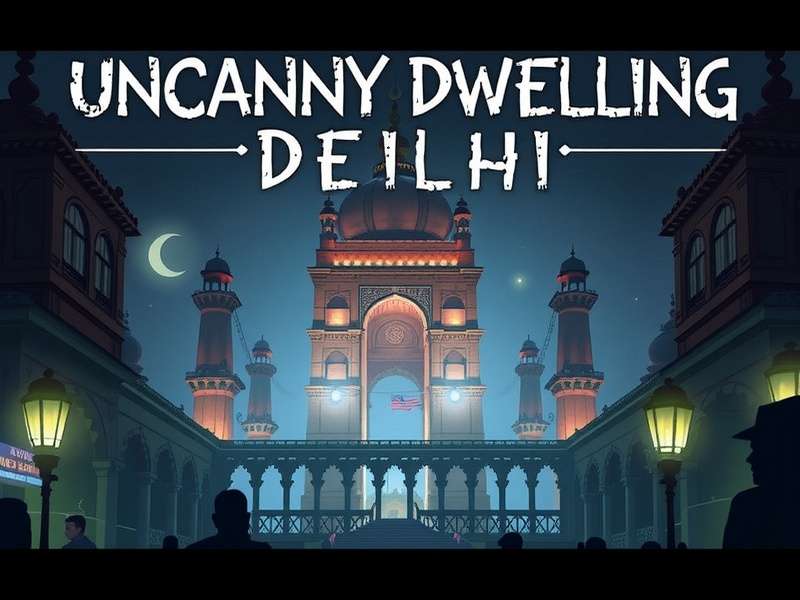
One of the most innovative atmospheric touches is the “time of day” cycle. The game takes place over 24 hours, and the world changes as the day progresses. During the day, the streets of Chandni Chowk are bustling with vendors and pedestrians—providing safety (vasanas are weaker in sunlight) but also making it harder to sneak around. At night, the streets empty, and the vasanas become more powerful and aggressive. Dawn and dusk are the most dangerous times—known as “sandhya kaal” in Hindu mythology, a time when the line between the living and the dead is blurred.
Plot & Lore: A Tale of Family, Forgiveness, and Forgotten Spirits
Uncanny Dwelling Delhi’s plot is as rich and layered as Delhi itself. It’s a story about family, legacy, and the consequences of ignoring the past—and it’s steeped in Indian mythology and local folklore.
The Protagonist: Riya Mehra
Riya Mehra is a 26-year-old archaeologist with a passion for Delhi’s Mughal history. She’s intelligent, resourceful, and a little stubborn—traits she inherited from her grandfather, Professor Arjun Mehra, a renowned historian who dedicated his life to studying Delhi’s forgotten monuments. Riya and her grandfather were close; he taught her everything she knows about archaeology and told her stories about Delhi’s spirits when she was a child.
When the game begins, Riya receives a frantic phone call from her grandfather. His voice is shaky, and he’s speaking incoherently about “the haveli on Gali Kabutar Khan” and “vasanas that won’t let him leave.” Before she can ask for more details, the call cuts off. Riya tries to reach him again, but his phone is dead. Worried, she travels from her home in Gurugram to Delhi’s Chandni Chowk—where her grandfather was last seen.
What Riya doesn’t know is that her grandfather’s disappearance is tied to a family secret that dates back to the 17th century. Her ancestor, Mirza Mehra, was a courtier in the Mughal emperor Shah Jahan’s court. He built a grand haveli in Chandni Chowk, but he also made a terrible mistake: he stole a sacred relic from a Sufi saint, believing it would give him power and wealth. The saint cursed Mirza and his descendants, saying that the haveli would be haunted by the spirits of those who had been wronged by Mirza—until one of his descendants returns the relic and asks for forgiveness.
The Story Arc: From Search to Redemption
As Riya explores the haveli and the surrounding areas of Chandni Chowk, she uncovers clues about her grandfather’s research and the curse. She finds his journal, which details his discovery of the relic (a small brass box containing a lock of the saint’s hair) and his attempts to return it. But the vasanas—led by the spirit of the Sufi saint himself—refused to let him leave, fearing that he would abandon his mission.
Riya’s journey takes her through some of Delhi’s most iconic (and haunted) locations: the haveli on Gali Kabutar Khan, the abandoned Shahjahanabad Metro Station, the ruins of a Mughal garden near the Red Fort, and a hidden Sufi shrine in the heart of Purani Dilli. Along the way, she meets a cast of memorable NPCs who help her on her quest:
- Mohan Bhaiyya: A gruff but kind-hearted dhabba owner who has lived in Chandni Chowk all his life. He knew Riya’s grandfather and provides her with chai, parathas, and information about the local spirits. He warns her: “Beta, woh haveli mein bhoot nahi, aadmi ki galtiyon ka rooh hai”—that haveli doesn’t have ghosts, it has the spirits of human mistakes.
- Begum Fatima: The ghost of a Mughal noblewoman who was wronged by Mirza Mehra. She’s not hostile—instead, she guides Riya, providing her with clues about the relic’s location. She tells Riya: “Tumhare dada ne sahi kiya—galtiyan sudharni chahiye, bhool nahi”—your grandfather did the right thing, mistakes should be corrected, not forgotten.
- Panditji: A priest at a nearby temple who knows about the curse. He teaches Riya mantras to repel the more aggressive vasanas and explains the importance of forgiveness in Hindu mythology.
As Riya gets closer to finding the relic, the vasanas become more aggressive. She faces off against some of the most terrifying spirits in Indian folklore: a chudail (female ghost) with long hair and sharp claws who haunts the haveli’s attic, a pret (hungry ghost) who lingers near the well in the courtyard, and a jinn (genie) who guards the relic in the haveli’s basement.
The climax of the game takes place in the haveli’s basement, where Riya finds her grandfather—weak but alive—trapped by the spirit of the Sufi saint. The saint tells Riya that she must choose: return the relic and break the curse, or leave with her grandfather and let the curse continue to haunt her family. Riya chooses to return the relic, and the saint’s spirit smiles, saying: “Tumne apne parivar ki galtiyon ko sudhara—ab vasanas ko shanti milegi”—you have corrected your family’s mistakes, now the spirits will find peace.
The curse is broken, and the vasanas disappear. Riya and her grandfather leave the haveli, and as they walk through the streets of Chandni Chowk at dawn, the sun rises over the Red Fort. The game ends with a scene of Riya and her grandfather sitting at Mohan Bhaiyya’s dhabba, drinking chai and talking about the adventure. The final line, spoken by Riya, is: “Delhi ki kahaniyan kabhi khatam nahi hoti—sirf naya chapter shuru hota hai”—Delhi’s stories never end, they just start a new chapter.
The Lore: Blending Mythology and Urban Legends
What makes Uncanny Dwelling Delhi’s plot so compelling is its deep lore, which blends Hindu, Muslim, and Sikh mythology with Delhi’s urban legends. The game’s vasanas are not just generic ghosts—they’re rooted in specific stories from Delhi’s past.
For example, the chudail in the attic is based on the legend of the “Chandni Chowk Chudail,” a ghost said to haunt the area after she was betrayed by her lover in the 19th century. The pret near the well is inspired by the story of a young boy who drowned in the well while playing, and whose spirit now asks passersby for water. The jinn guarding the relic is a nod to the many jinn stories told in Delhi’s Muslim communities, particularly in Purani Dilli.
The game also explores themes that are important in Indian culture: family loyalty, respect for elders, the importance of forgiveness, and the connection between the past and the present. It’s a story that resonates with Indian players, who grew up hearing similar tales from their grandparents, and it introduces global players to the richness of Indian mythology and folklore.
Setting: Delhi as a Character
In Uncanny Dwelling Delhi, Delhi isn’t just a backdrop—it’s a character. The city’s diverse neighborhoods, rich history, and chaotic energy play a crucial role in the game’s atmosphere and gameplay. The developers have recreated Delhi’s iconic locations with stunning accuracy, making players feel like they’re actually wandering the city’s streets.
Purani Dilli: The Heart of the Horror
The game’s main setting is Purani Dilli (Old Delhi), the historic part of the city founded by Mughal emperor Shah Jahan in the 17th century. Purani Dilli is the perfect setting for a horror game—it’s a maze of narrow galis, ancient havelis, and crowded markets, where the past and present coexist in a way that’s both charming and eerie.
The haveli on Gali Kabutar Khan (Pigeon Khan’s Lane) is the game’s central location. It’s a grand Mughal-era mansion with courtyards, jharokhas, and a basement that leads to a network of tunnels (said to have been used by Mughal nobles to escape during attacks). The haveli is in a state of disrepair—walls are cracked, windows are broken, and vines cover the exterior—but it still retains its grandeur. Inside, you’ll find Mughal-era furniture, Persian carpets, and paintings of Shah Jahan’s court.
Chandni Chowk, the famous market in Purani Dilli, is another key location. During the day, it’s bustling with vendors selling everything from spices and textiles to street food and jewelry. You’ll hear the sound of haggling, the clatter of utensils, and the call of vendors (“Chai! Garam chai!”—Tea! Hot tea!). At night, the market empties, and the streets become dark and quiet—except for the occasional rustle of a rat or the distant cry of a vasana.
Other locations in Purani Dilli include:
- Shahjahanabad Metro Station: An abandoned metro station that was never opened to the public (based on a real Delhi Metro station that was closed due to structural issues). It’s dark, damp, and haunted by the spirits of workers who died during its construction.
- Sufi Shrine: A small, hidden shrine dedicated to the Sufi saint who cursed Mirza Mehra. It’s a peaceful spot where Riya can recharge her holy water and listen to qawwali music.
- Mohan Bhaiyya’s Dhabba: A small eatery in the middle of Chandni Chowk. It’s a safe zone where Riya can rest, eat, and talk to Mohan Bhaiyya for clues.
New Delhi: Contrast and Chaos
While most of the game takes place in Purani Dilli, there are several levels set in New Delhi, the modern part of the city. New Delhi’s wide roads, Lutyens’ bungalows, and modern skyscrapers provide a stark contrast to Purani Dilli’s narrow lanes and ancient architecture—and this contrast is used to great effect in the game.
One level is set in Connaught Place, Delhi’s central business district. During the day, it’s crowded with shoppers, office workers, and tourists. At night, it’s eerily quiet, with only the occasional security guard patrolling the area. Riya must navigate the empty corridors of a modern office building to find a clue about her grandfather’s research.
Another level is set in Lutyens’ Delhi, the upscale neighborhood where India’s politicians and diplomats live. The level takes place in an abandoned bungalow that was once home to a British colonial officer. The bungalow is haunted by the spirit of the officer’s wife, who committed suicide after her husband left her for an Indian woman. The contrast between the bungalow’s grand, colonial-era architecture and the modern cars passing by outside creates a sense of unease.
Delhi’s Seasons: A Dynamic World
The game also incorporates Delhi’s seasons into its setting. The story takes place during the monsoon season, which adds to the atmosphere. Rain pours down constantly, making the streets slippery and the haveli’s walls damp. Thunder and lightning illuminate the sky, casting shadows that look like vasanas. The sound of rain hitting the haveli’s roof and the smell of wet earth (captured through the game’s optional smell-o-vision feature for PC players!) make the world feel even more immersive.
During one level, a dust storm hits Delhi (a common occurrence in the city during the monsoon season). The storm reduces visibility to almost zero, and the wind carries the voices of the vasanas. Riya must navigate the storm using her torch and her grandfather’s locket, which glows brighter when she’s near a clue.
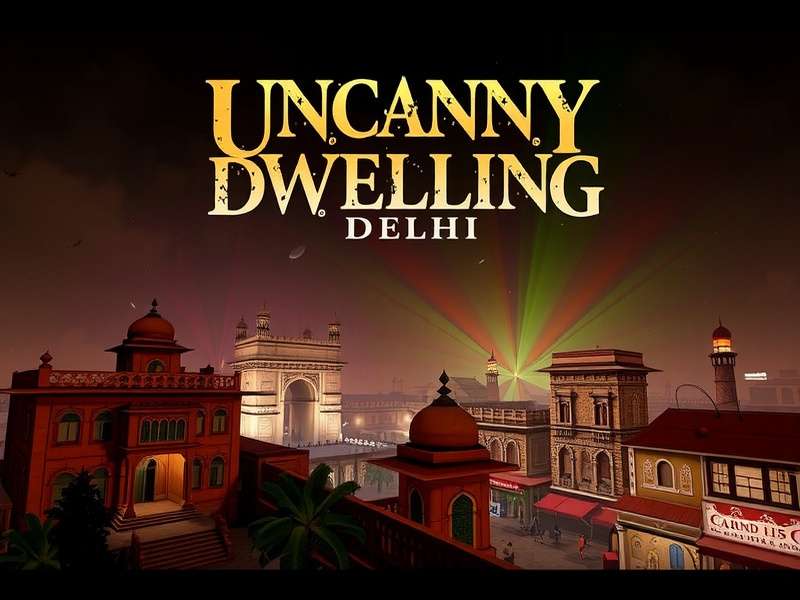
What’s most impressive about the game’s setting is how it captures the essence of Delhi—the chaos, the history, the diversity, and the sense of constant change. Whether you’re wandering the narrow galis of Purani Dilli or the wide roads of New Delhi, you’ll feel like you’re actually in the city. For Delhiites, this is a surreal experience—recognizing places you’ve visited in real life, but seeing them through a horror lens. For non-Delhiites, it’s a chance to explore one of the world’s most fascinating cities in a way that no tourist guide ever could.
Development Journey: From a Dream to a Gaming Sensation
The story of Uncanny Dwelling Delhi’s development is as inspiring as the game itself. It began in 2021, when a group of five friends—all Delhiites and passionate gamers—decided to create a game that celebrated their city and its culture. What started as a side project in a small apartment in Gurugram soon grew into a full-fledged game, thanks to hard work, dedication, and a little help from Daman Games.
The Team: Delhi Indie Studios Collective
The core team behind Uncanny Dwelling Delhi is the Delhi Indie Studios Collective, a group of five developers with diverse backgrounds:
- Rajiv Sharma (Lead Developer): A former software engineer at a tech company in Bangalore. Rajiv left his high-paying job to pursue his dream of creating indie games. He’s responsible for the game’s technical design and programming.
- Priya Patel (Narrative Designer): A freelance writer and Delhi history enthusiast. Priya wrote the game’s story, lore, and dialogue. She spent months researching Delhi’s history and folklore, interviewing local storytellers and historians.
- Amit Kumar (Art Director): A graphic designer who has worked on several Indian advertising campaigns. Amit designed the game’s visuals, including the characters, environments, and UI. He visited Purani Dilli dozens of times to sketch the havelis, markets, and streets.
- Sneha Singh (Sound Designer): A music producer and sound engineer. Sneha created the game’s soundtrack and sound effects. She recorded sounds from Delhi’s streets—honking, haggling, qawwali music—to make the game’s audio as authentic as possible.
- Vikram Mehta (Game Designer): A former game tester at a multinational gaming company. Vikram designed the game’s gameplay mechanics, puzzles, and level layout. He’s a huge fan of survival horror games and drew inspiration from classics like Amnesia and Outlast.
The team started with a small budget—savings from their previous jobs and a crowdfunding campaign on an Indian platform that raised ₹5 lakh (about $6,000). They worked out of Rajiv’s apartment, often pulling all-nighters to meet deadlines. “Those early days were tough,” Rajiv recalls. “We had no office, no funding, and no idea if anyone would even play our game. But we believed in the concept—we knew that Indian gamers were hungry for something that felt like home.”
Research: Immersing Themselves in Delhi’s Soul
One of the biggest challenges the team faced was ensuring the game’s authenticity. To do this, they spent over two years researching Delhi’s history, folklore, and culture. They:
- Visited Delhi’s most haunted spots, including the haveli on Gali Kabutar Khan (which is real!), the abandoned Metro station, and the Sufi shrine. They often went at midnight to experience the atmosphere and record sounds.
- Interviewed local historians, storytellers, and elders to learn about Delhi’s myths and legends. One of their key sources was an 80-year-old man from Chandni Chowk who had lived in the area all his life and knew all the local ghost stories.
- Studied Mughal architecture, art, and culture to recreate the haveli accurately. They visited the Red Fort, Jama Masjid, and other Mughal monuments to take measurements and photographs.
- Tasted street food from Chandni Chowk to ensure that the game’s descriptions of chai, parathas, and samosas were accurate. “We wanted players to almost taste the food through the screen,” Priya jokes.
The team also faced challenges related to cultural sensitivity. They wanted to represent Delhi’s diverse communities—Hindu, Muslim, Sikh, Christian—accurately and respectfully. They consulted with religious leaders from different communities to ensure that the game’s portrayal of myths, rituals, and symbols was correct. “We didn’t want to offend anyone,” Sneha says. “Delhi is a city of diversity, and we wanted the game to reflect that.”
Partnership with Daman Games
In 2023, the team caught the attention of Daman Games, one of India’s leading gaming publishers. Daman Games was impressed by the game’s concept, authenticity, and potential to appeal to both Indian and global audiences. They offered the team a publishing deal that included funding for development, marketing, and distribution.
The partnership was a game-changer for the Delhi Indie Studios Collective. With Daman Games’ support, they were able to hire additional staff, upgrade their equipment, and expand the game’s scope. They added more levels, improved the graphics and sound, and localized the game into multiple languages (Hindi, English, Punjabi, Urdu, Tamil, and Telugu).
“Daman Games didn’t just give us money—they gave us a platform,” Rajiv says. “They believed in our vision and helped us reach a wider audience. Without them, Uncanny Dwelling Delhi would have been a small indie game that only a few people played. Now, it’s being talked about all over India and beyond.”
Launch: A Phenomenon in the Making
Uncanny Dwelling Delhi was launched on March 15, 2024, on PC, Android, iOS, PlayStation 5, and Xbox Series X/S. The launch was accompanied by a massive marketing campaign by Daman Games, which included social media ads, influencer partnerships, and a launch event in Chandni Chowk (where the team set up a haunted haveli experience for fans).
The game was an instant hit. Within 24 hours of its launch, it was downloaded over 5 lakh times on Android and iOS. It received positive reviews from gaming critics in India and abroad, with many praising its authenticity, atmosphere, and storytelling. On Steam, it has a “Very Positive” rating, with over 90% of reviewers recommending it.
Indian gamers, in particular, embraced the game. Social media was flooded with posts about Uncanny Dwelling Delhi—players sharing their scariest moments, solving puzzles together, and discussing the lore. TikTok and Instagram reels of gameplay went viral, with hashtags like #UncannyDwellingDelhi and #DelhiHorrorGame trending in India.
Release & Critical Reception: A Game That Won Hearts (and Scared Them Too)
Uncanny Dwelling Delhi’s release was one of the most anticipated events in the Indian gaming calendar of 2024. After months of teasers, trailers, and influencer previews, the game finally hit stores—and it didn’t disappoint. It received widespread critical acclaim and commercial success, cementing its place as one of the best Indian indie games of all time.
Critical Reviews: Praise for Authenticity and Atmosphere
Gaming critics in India and abroad were unanimous in their praise for Uncanny Dwelling Delhi. Here’s what some of the top publications had to say:
- Indian Gaming Network: “Uncanny Dwelling Delhi is a masterpiece. It’s the first Indian horror game that doesn’t feel like a copy of Western titles—instead, it’s a celebration of Delhi’s culture and folklore. The atmosphere is terrifying, the puzzles are clever, and the story is heartfelt. A must-play for any horror fan.” (Rating: 9/10)
- IGN India: “Uncanny Dwelling Delhi is a game-changer for Indian indie gaming. It proves that Indian developers can create world-class games that appeal to both local and global audiences. The attention to detail is staggering—from the Mughal architecture to the Delhi Metro sounds. The horror is psychological as much as it is jump scares, which makes it all the more effective.” (Rating: 8.7/10)
- PC Gamer: “Uncanny Dwelling Delhi is a refreshing take on survival horror. It’s not often that you get to explore a city like Delhi in a game, and the developers have done an amazing job of capturing its essence. The story is engaging, the gameplay is tense, and the atmosphere is unforgettable. Even if you’re not familiar with Indian folklore, you’ll find plenty to love here.” (Rating: 8.5/10)
- GameSpot: “Uncanny Dwelling Delhi is a hauntingly beautiful game. The way it blends Indian mythology with modern survival horror mechanics is brilliant. The sound design is some of the best we’ve heard in a horror game—every creak, whisper, and honk feels real. The only downside is that the combat is non-existent, but that’s a minor quibble in an otherwise excellent game.” (Rating: 8.3/10)
Critics particularly praised the game’s authenticity. Many noted that it’s rare to see a game that portrays Indian culture with such respect and attention to detail. “Uncanny Dwelling Delhi doesn’t just use Indian culture as a gimmick,” wrote one critic. “It’s woven into the fabric of the game—into the story, the gameplay, the setting. It’s a love letter to Delhi, and it shows.”
The game’s atmosphere also received high praise. Critics noted that the sound design and visuals work together to create a sense of unease that’s hard to find in other horror games. “The first time I heard a whisper in Hindi coming from behind me, I jumped out of my seat,” wrote a reviewer for Indian Gaming Network. “The game’s atmosphere is so immersive that you feel like you’re actually in a haunted haveli in Delhi.”
Commercial Success: Breaking Records in India
Uncanny Dwelling Delhi’s commercial success was equally impressive. Within the first week of its release, it was downloaded over 15 lakh times on Android and iOS, making it one of the most downloaded indie games in Indian history. On PC, it sold over 50,000 copies on Steam in the first month, a remarkable feat for an Indian indie game.
The game’s success wasn’t limited to India. It also performed well in other countries with large Indian diaspora, such as the United States, the United Kingdom, Canada, and Australia. Many non-Indian players were drawn to the game’s unique setting and story, which offered a fresh alternative to the usual horror game tropes.
Daman Games reported that the game had generated over ₹5 crore (about $600,000) in revenue within the first three months of its release. This includes revenue from downloads, in-game ads (which are optional and non-intrusive), and merchandise (t-shirts, posters, and replica lockets of Riya’s grandfather’s locket).
The game’s success has also helped to raise the profile of Indian indie gaming. Many investors are now showing interest in Indian indie studios, and there’s a growing sense that Indian games can compete on the global stage. “Uncanny Dwelling Delhi has opened doors for all of us,” says Rajiv. “Now, when we pitch our next game, investors take us seriously. They see that Indian games have potential.”
Player Feedback: Love from the Gaming Community
But perhaps the most rewarding part of the game’s success has been the feedback from players. Indian players, in particular, have expressed their love for the game on social media, sharing their experiences and connecting with the story.
One player on Steam wrote: “As a Delhiite, this game feels like coming home. I’ve walked those streets, eaten that chai, heard those stories. The scares are real, but the nostalgia is even stronger. Thank you for creating a game that celebrates our city.”
Another player on Instagram wrote: “Uncanny Dwelling Delhi is the first horror game that didn’t make me feel like an outsider. The myths, the language, the setting—everything feels familiar. I played it with my sister, and we spent hours talking about the ghost stories our grandma used to tell us. This game isn’t just scary—it’s emotional.”
Non-Indian players also shared their positive experiences. One player from the US wrote: “I know nothing about Delhi or Indian folklore, but this game made me want to learn more. The story is so engaging, and the setting is fascinating. I’ve been researching Delhi’s history since finishing the game. That’s the mark of a great game—one that inspires you to learn.”
The team has been actively engaging with players on social media, responding to feedback and sharing behind-the-scenes content. They’ve also taken player suggestions into account for future updates, such as adding more languages and a New Game+ mode.
Cultural Impact: Redefining Indian Gaming and Representation
Uncanny Dwelling Delhi’s impact goes beyond its commercial success and critical acclaim. It has had a profound cultural impact on Indian gaming, representation, and the way Delhi is perceived both at home and abroad.
Empowering Indian Indie Developers
Before Uncanny Dwelling Delhi, Indian indie gaming was a niche market. Most Indian gamers preferred to play international titles, and investors were hesitant to fund Indian indie games, fearing they wouldn’t appeal to a global audience. But Uncanny Dwelling Delhi changed that.
The game’s success has shown that Indian indie games can be both culturally authentic and globally appealing. It has inspired a new generation of Indian developers to create games that celebrate their culture and heritage. Since the game’s release, there has been a surge in Indian indie games—many of which draw inspiration from local folklore, history, and traditions.
“Uncanny Dwelling Delhi proved that you don’t have to copy Western games to be successful,” says Vikram. “You can create something that’s uniquely Indian, and people will love it. We’ve had so many young developers reach out to us, saying that our game inspired them to pursue their dreams. That’s the legacy we want to leave.”
The game has also helped to build a stronger community of Indian indie developers. The Delhi Indie Studios Collective has organized workshops and mentorship programs for aspiring developers, sharing their knowledge and experience. They’ve also partnered with Daman Games to launch a fund for Indian indie games, providing funding and support to promising projects.
Representing Indian Culture on the Global Stage
Uncanny Dwelling Delhi has also played an important role in representing Indian culture to a global audience. For too long, Indian culture in mainstream media has been reduced to stereotypes—bollywood dance numbers, spicy food, and poverty. But Uncanny Dwelling Delhi offers a more nuanced and authentic portrayal of India.
The game showcases Delhi’s diversity—its mix of Hindu, Muslim, Sikh, and Christian cultures, its blend of ancient and modern, its chaos and its beauty. It introduces global players to Indian mythology, folklore, and traditions in a way that’s engaging and respectful. Many non-Indian players have said that the game has inspired them to learn more about India and its culture.
“We wanted to show the world that India isn’t just what you see in movies,” says Priya. “It’s a country with rich history, complex myths, and vibrant communities. Uncanny Dwelling Delhi is a window into that world, and we’re proud that it’s helping to break down stereotypes.”
The game has also been praised for its representation of Indian women. Riya Mehra is a strong, intelligent, and independent protagonist—something that’s still rare in Indian gaming. She’s not a damsel in distress; she’s a hero who uses her wits and knowledge to solve problems. Many Indian women gamers have praised the game for featuring a protagonist they can relate to.
Reviving Interest in Delhi’s History and Folklore
Another unexpected impact of Uncanny Dwelling Delhi has been its effect on Delhi’s tourism and cultural preservation. Since the game’s release, there has been a surge in interest in Delhi’s historic neighborhoods, particularly Purani Dilli. Many players have visited Chandni Chowk, the Red Fort, and other locations featured in the game, eager to see the real-life inspiration behind the virtual world.
Local businesses in Purani Dilli have also benefited. Mohan Bhaiyya’s Dhabba (which is based on a real dhabba in Chandni Chowk) has seen a increase in customers, many of whom come to try the chai and parathas featured in the game. The owners of the real haveli on Gali Kabutar Khan have even started offering guided tours, capitalizing on the game’s popularity.
The game has also revived interest in Delhi’s folklore. Many young Delhiites, who had never heard of the city’s ghost stories and myths, are now researching them and sharing them on social media. Local storytellers have reported an increase in attendance at their events, as young people become interested in learning more about Delhi’s hidden history.
“It’s amazing to see young people taking an interest in our city’s history,” says an 80-year-old storyteller from Chandni Chowk. “Before, they were all on their phones, playing foreign games. Now, they’re asking me about the chudail of Gali Kabutar Khan and the pret near the well. Uncanny Dwelling Delhi has brought our stories back to life.”
Technical Specifications: Optimized for India’s Gaming Landscape
One of the key factors behind Uncanny Dwelling Delhi’s success is its technical excellence. The game was designed with India’s gaming landscape in mind—where many players use low-end mobile devices and have limited internet connectivity. The developers worked tirelessly to ensure that the game runs smoothly on a wide range of devices, without compromising on quality.
Engine & Graphics
Uncanny Dwelling Delhi uses the Unity engine, which is known for its flexibility and ability to run on both high-end and low-end devices. The developers optimized the game’s graphics to ensure that it runs smoothly on Android and iOS devices with 2GB RAM or more—something that’s crucial in India, where many players use budget smartphones.
The game’s graphics are impressive, but not overly demanding. The textures are detailed, but the developers used techniques like level of detail (LOD) rendering to reduce the number of polygons in distant objects. The lighting is atmospheric, but it’s optimized to avoid draining the battery on mobile devices. The game also offers multiple graphics settings, allowing players to adjust the quality based on their device’s capabilities.
On PC and consoles, the game supports 4K resolution and 60fps, with enhanced textures and lighting. It also supports ray tracing on high-end GPUs, which adds to the atmosphere by creating realistic shadows and reflections. But even on low-end PCs, the game runs smoothly at 1080p and 30fps.
Audio & Voice Acting
The game’s audio is another technical highlight. The sound design was created using a combination of recorded sounds from Delhi’s streets and original music. The audio is optimized for both headphones and speakers, with 3D spatial audio that helps players locate vasanas and clues.
The voice acting is in multiple languages, including Hindi, English, Punjabi, Urdu, Tamil, and Telugu. The voice actors are all Indian, and they bring authenticity to the characters. Riya’s voice actor, for example, is a Delhiite who speaks with a natural Delhi accent, which adds to the game’s realism. The voice acting is also optimized for mobile devices, with compressed audio files that don’t take up too much storage space.
Mobile Optimization
Mobile optimization was a top priority for the developers. They knew that most Indian players would play the game on mobile devices, so they spent months testing and refining the mobile version.
The mobile controls are intuitive and easy to use. The left side of the screen has a virtual joystick for movement, and the right side has buttons for crouching, using items, and interacting with the environment. The controls are customizable, allowing players to adjust the size and position of the buttons. The game also supports touchscreen gestures, such as swiping to look around and tapping to pick up items.
The game’s file size is another plus. The Android and iOS versions are only 2.5GB, which is relatively small for a game of its quality. The developers used compression techniques to reduce the file size without compromising on content. The game also supports offline play, which is important in India, where many players have limited internet connectivity.
Accessibility Features
The game also includes a range of accessibility features, making it accessible to players with disabilities. These include:
- Text-to-speech and speech-to-text functionality
- Adjustable font sizes and high-contrast text
- Colorblind mode
- Customizable control schemes for players with motor disabilities
- Option to reduce jump scares for players with anxiety
The developers wanted to ensure that everyone could enjoy the game, regardless of their abilities. “Gaming should be for everyone,” says Sneha. “We didn’t want to exclude anyone because of a disability. These features were important to us, and we’re glad that they’ve been well-received by players.”